01
Identify
The registered farmer and plot record establish the delivery’s origin and certification status.
A CocoaRadar field report · San Martín, Peru
A fog-bound flight and an anxious second attempt preceded a journey into Peru’s leading cacao-producing region. From a six-hectare plot to a Tarapoto facility, this is how cacao begins its journey — and how identity, certification and environmental claims follow the beans.
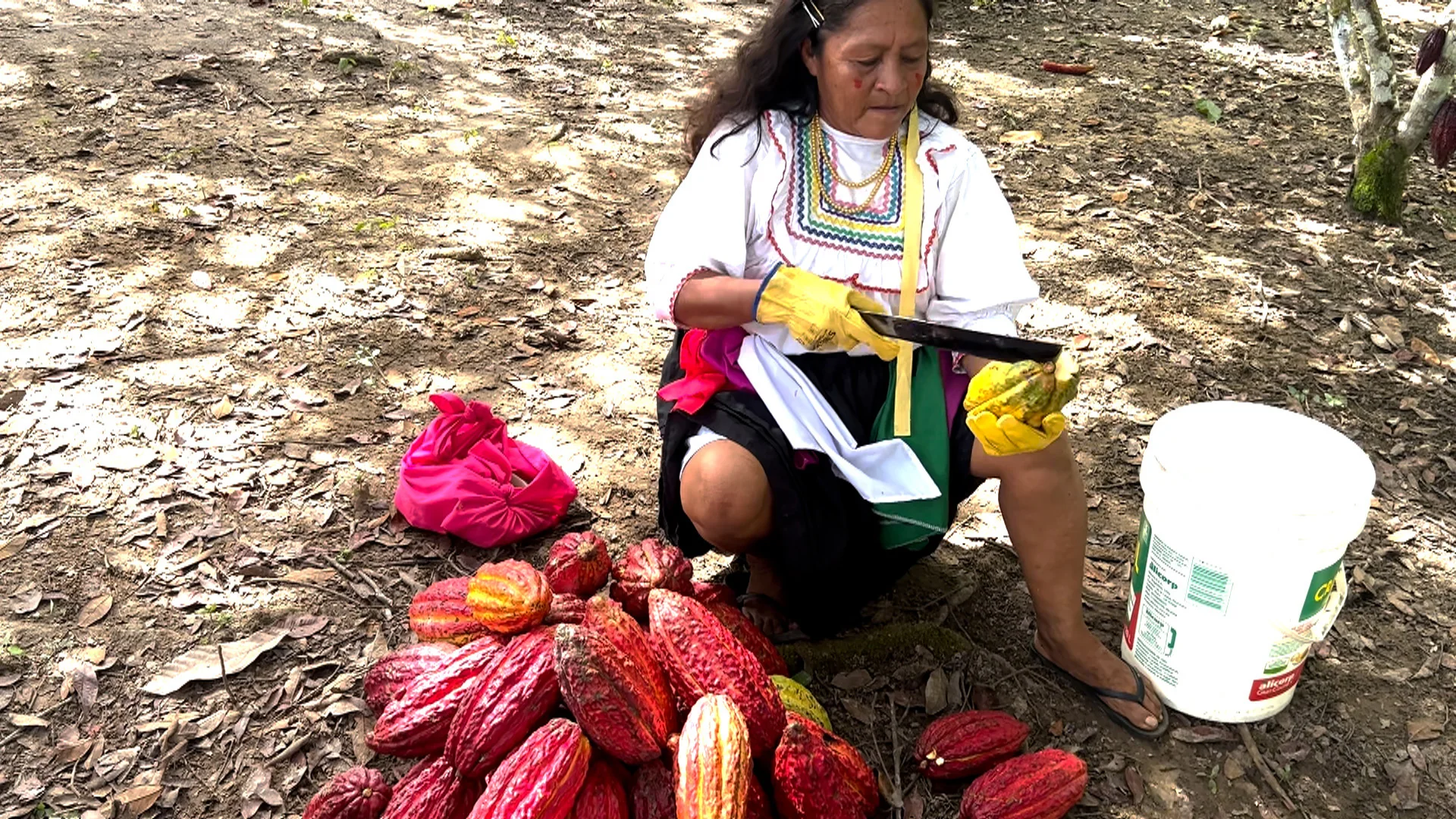
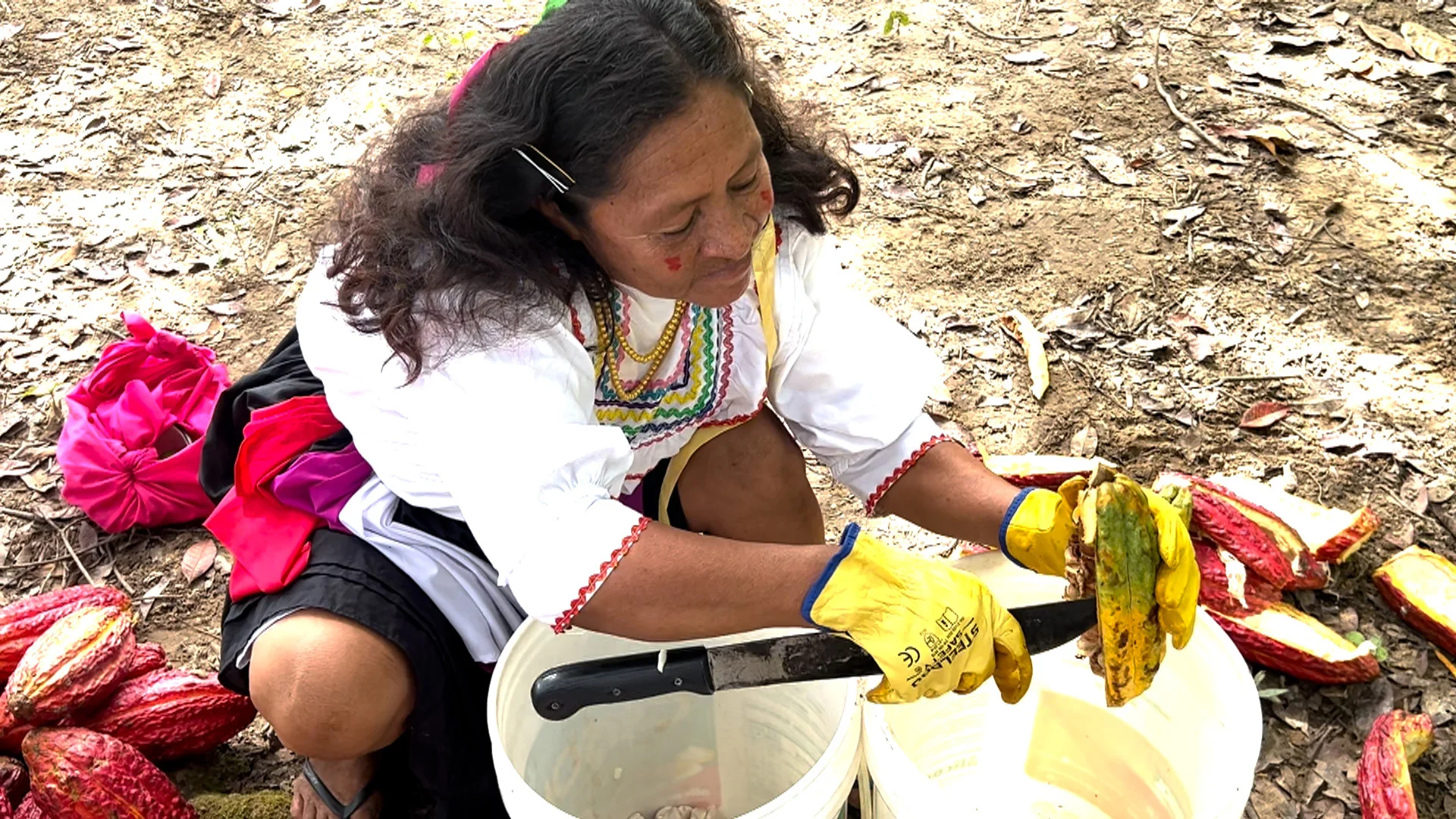
Hero: Dorita cracking open cacao pods · CocoaRadar
Lima → Tarapoto
It was an inauspicious start to my Peruvian cacao adventure.
After flying into Lima the previous day, I faced a 6am departure for Tarapoto, the gateway to San Martín and the farms at the beginning of Machu Picchu Foods’ supply chain.
Jet-lagged and extremely drowsy, I slept through most of the one-hour flight. What I did not know was that thick fog had prevented the aircraft from landing in Tarapoto and forced it to turn back.
I woke, dazed and confused, as we touched down back in Lima. It was left to the Machu Picchu Foods team travelling with me to explain that we were precisely where we had started.
After breakfast at Lima airport, we tried again.
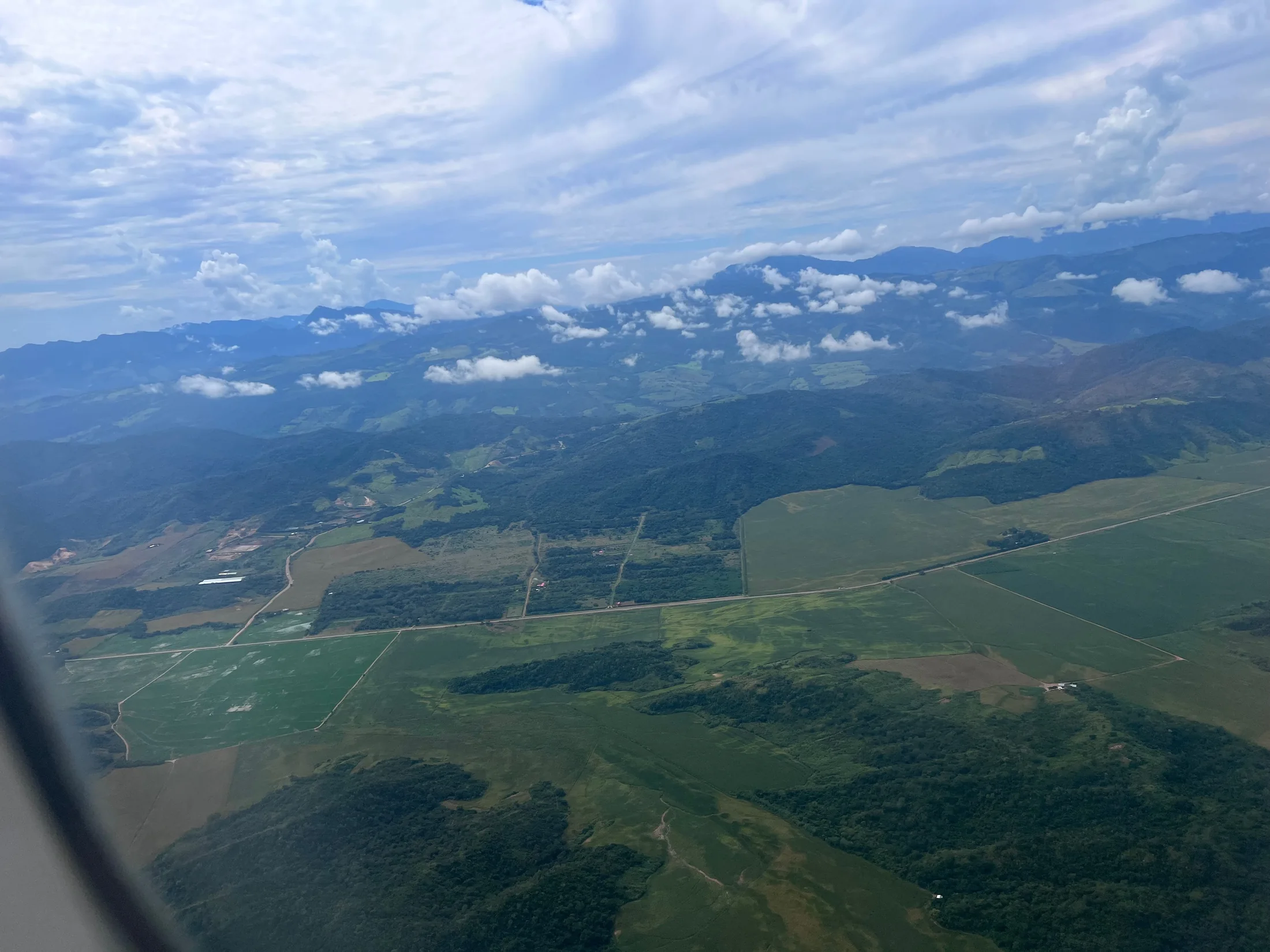
Sleep proved more elusive on the second flight. As we approached the vast green expanse of the Amazon, I could not suppress the thought: what if we crashed and disappeared into the jungle?
Perhaps I had been watching too many Netflix series. Nevertheless, the relief was real when the wheels finally met the runway at the tiny Tarapoto airport.
Chapter two
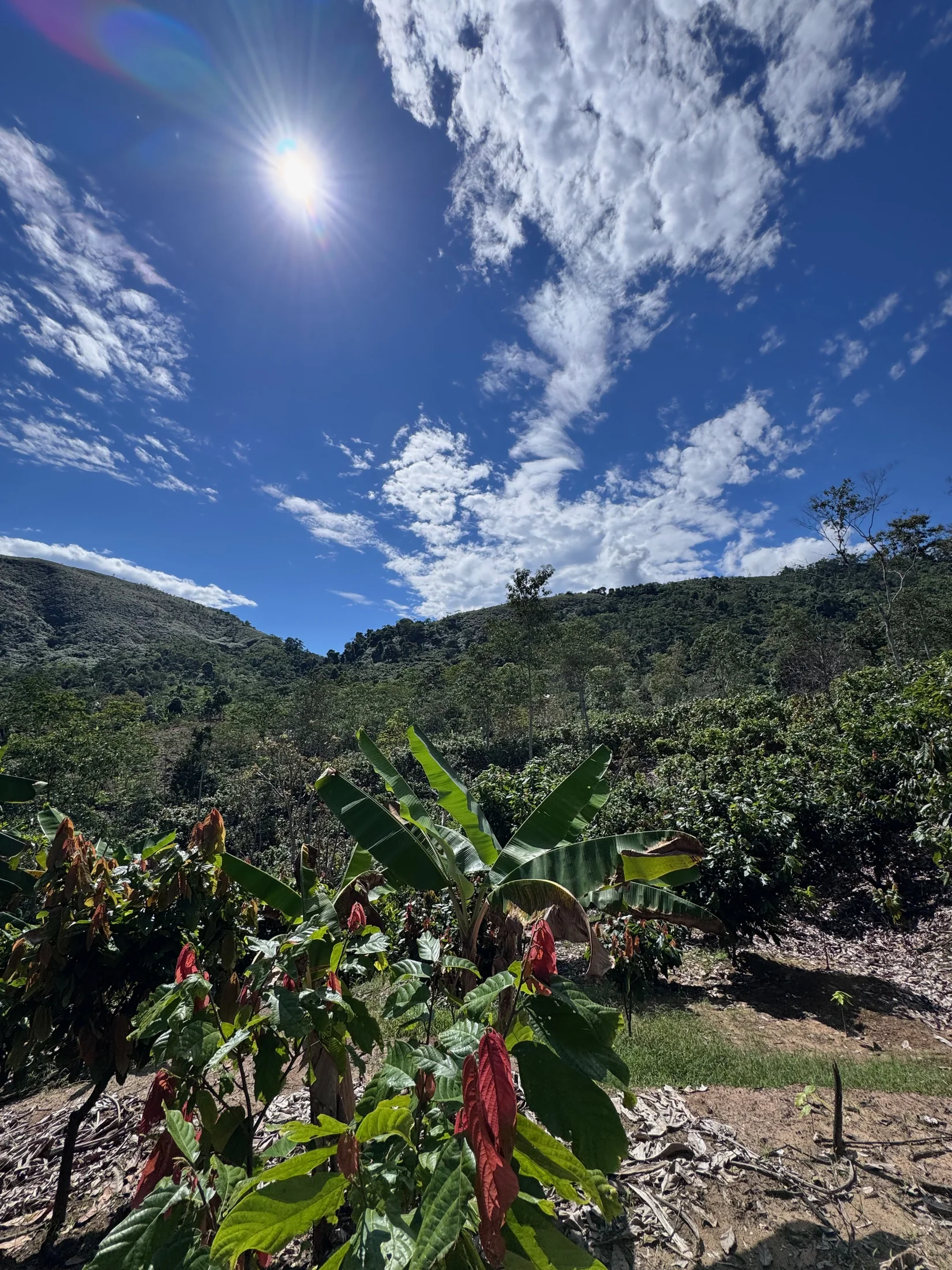
From the airport, we continued in a Machu Picchu Foods four-wheel drive, climbing along a winding dirt road through increasingly dense vegetation. The views opened across the forest as we approached an altitude of almost 800 metres.
Our destination was a smallholder cacao farm in the Pampamonte sector near Tabalosos, in Lamas Province.
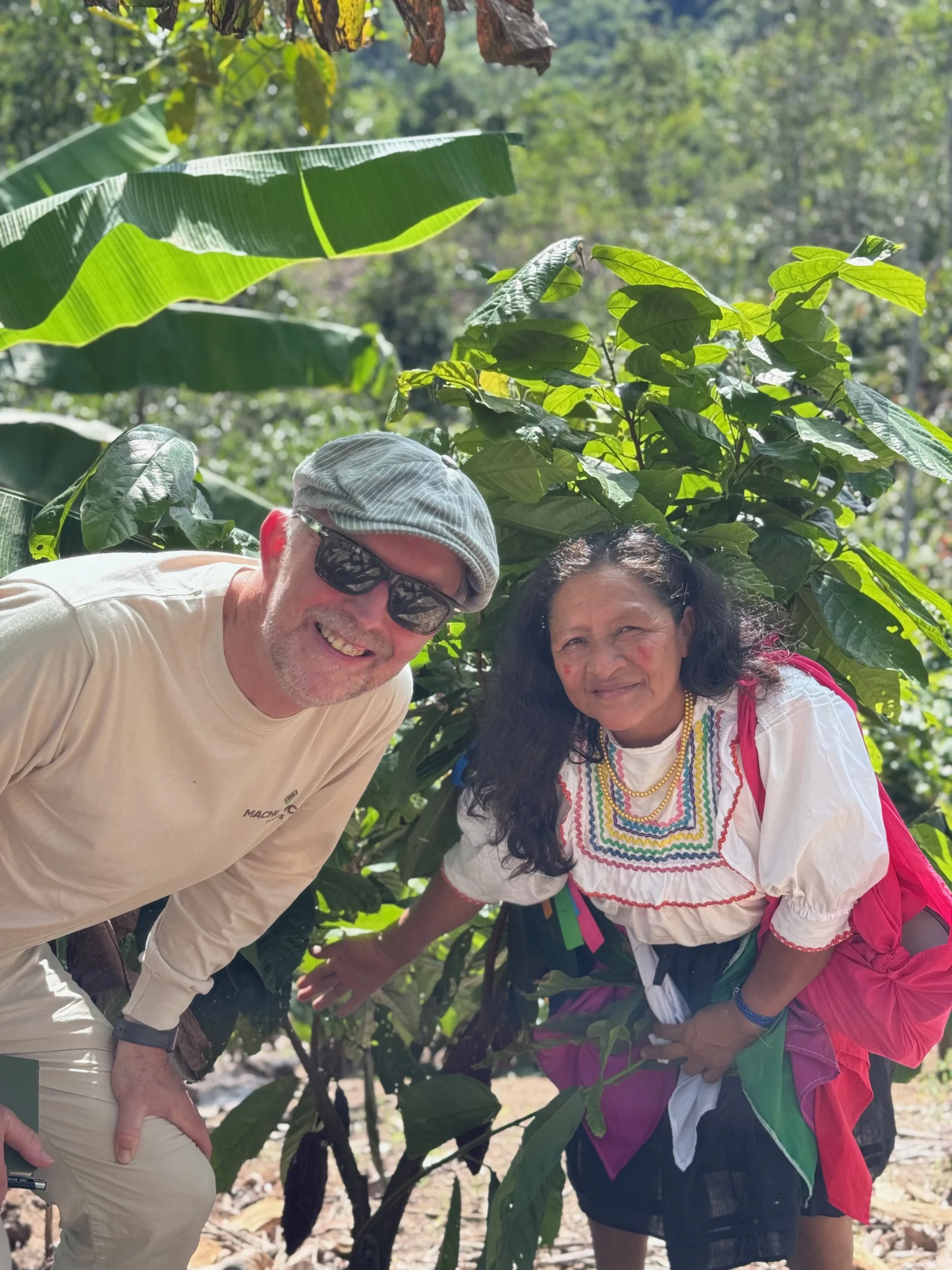
A sign at the entrance identified the farm as Fundo Indanal and named its grower as Dorita Sangama Salas. It recorded 6.23 hectares — about 15 acres — under organic cacao cultivation at an altitude of 756 metres.
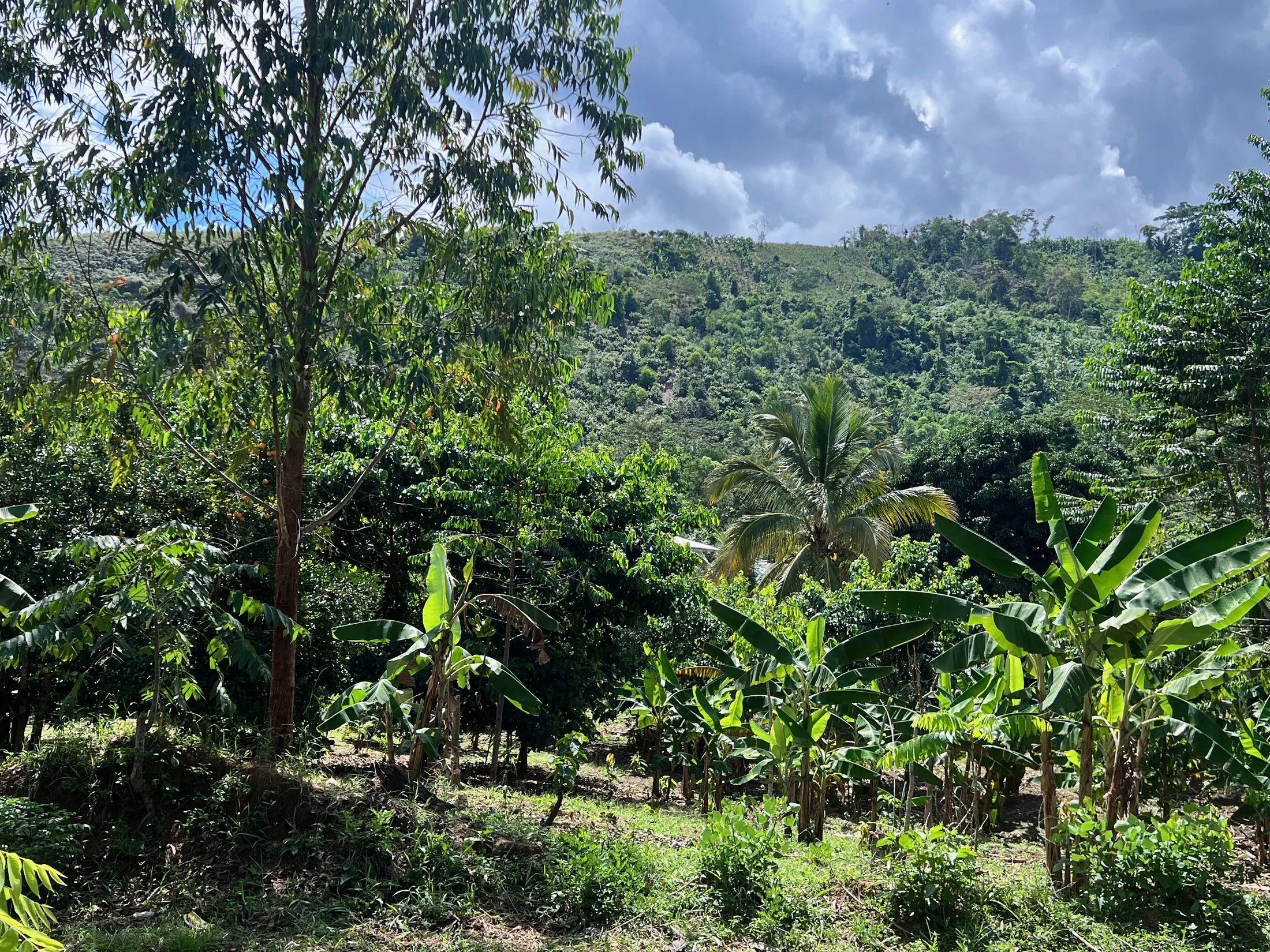
I have visited cacao-growing communities in several countries, but travelling to the source never loses its impact.
Consumers usually encounter cacao only after it has been transformed into a finished product, wrapped and placed on a shop shelf. On a farm, its meaning is entirely different. The trees represent years of work, exposure to weather and disease, and the income on which a household may depend.
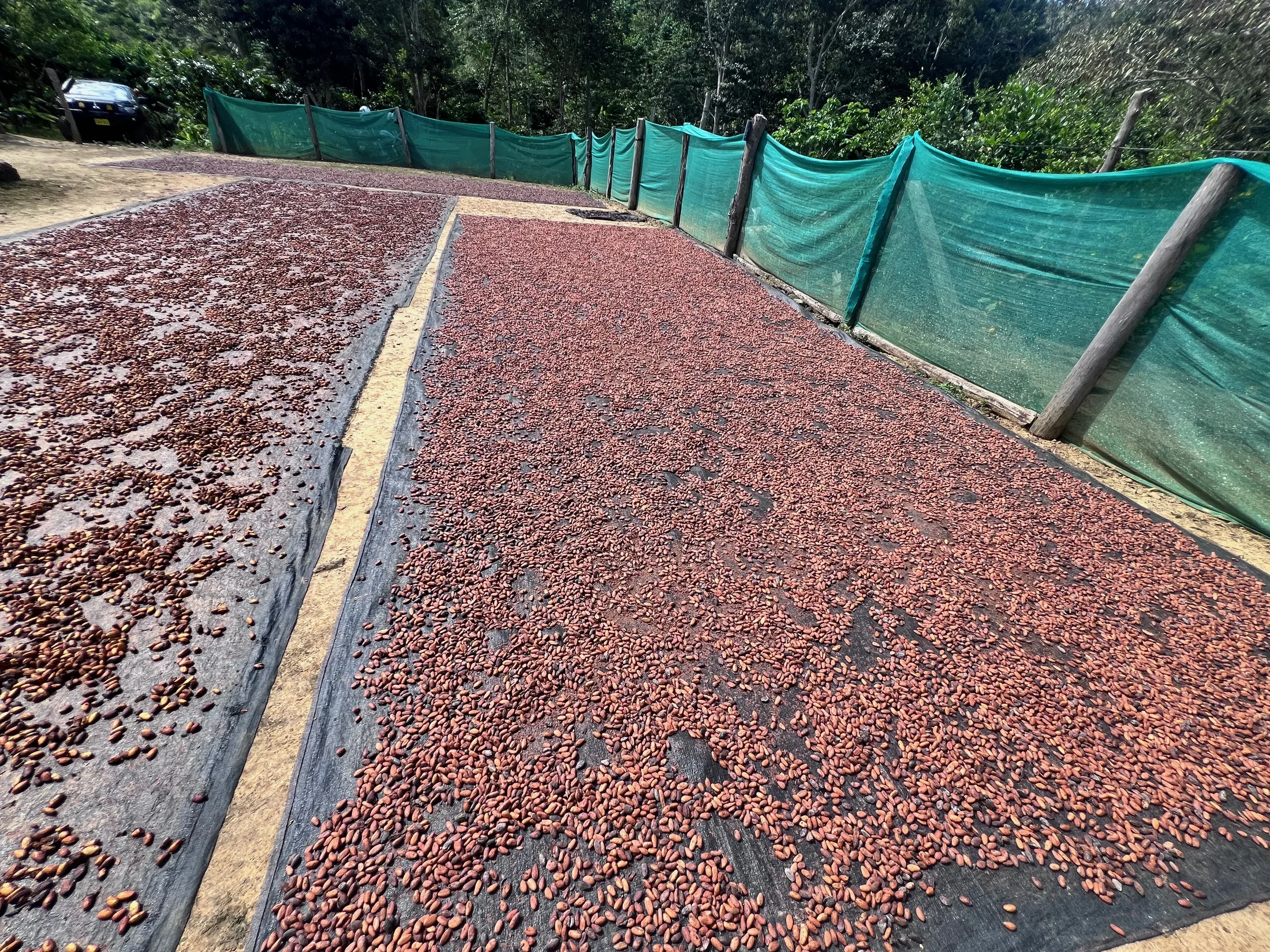
What also gets me is how the experience reminds me of home. I may be thousands of miles away, but the strong smell of fresh cacao drying in the sun takes me back to my childhood in York, England.
The city was then home to two chocolate factories, Terry’s and Rowntree’s, on opposite sides of York. At certain times of the year, the smell of chocolate wafting across the city was an overwhelming delight as the beans entered the factories and chocolate-making began.
The circumstances of cacao farmers vary greatly between countries and even between neighbouring communities. Dorita appeared notably upbeat about her crop and the living it provided.
Unlike some West African producing countries, Peru does not operate a comparable nationally administered farmgate-pricing system. That exposes growers more directly to changing commercial conditions, but it can also allow a strong market to translate more quickly into higher prices at farm level.
“My name is Dorita Sangama Salas. I’ve been committed to Machu Picchu Foods for eight years. Here is my product, here are my seedlings, we can walk around my plot. Welcome, it is very important. Thank you very much.”
Watch from the farm
A short film from the visit to Fundo Indanal.
Chapter three
Norvin Fasabi Grandez, introduced as Machu Picchu Foods’ regional supervisor for the Tarapoto area, described Dorita as an organic producer whose farm also held Rainforest Alliance certification.
He said his work included organising training for producers, supporting good harvesting practices and helping farms maintain the standards required by certification programmes.
Dorita’s decision not to use conventional pesticides is central to the farm’s organic management. It also makes careful husbandry and technical support especially important when pests or fungal diseases threaten production.
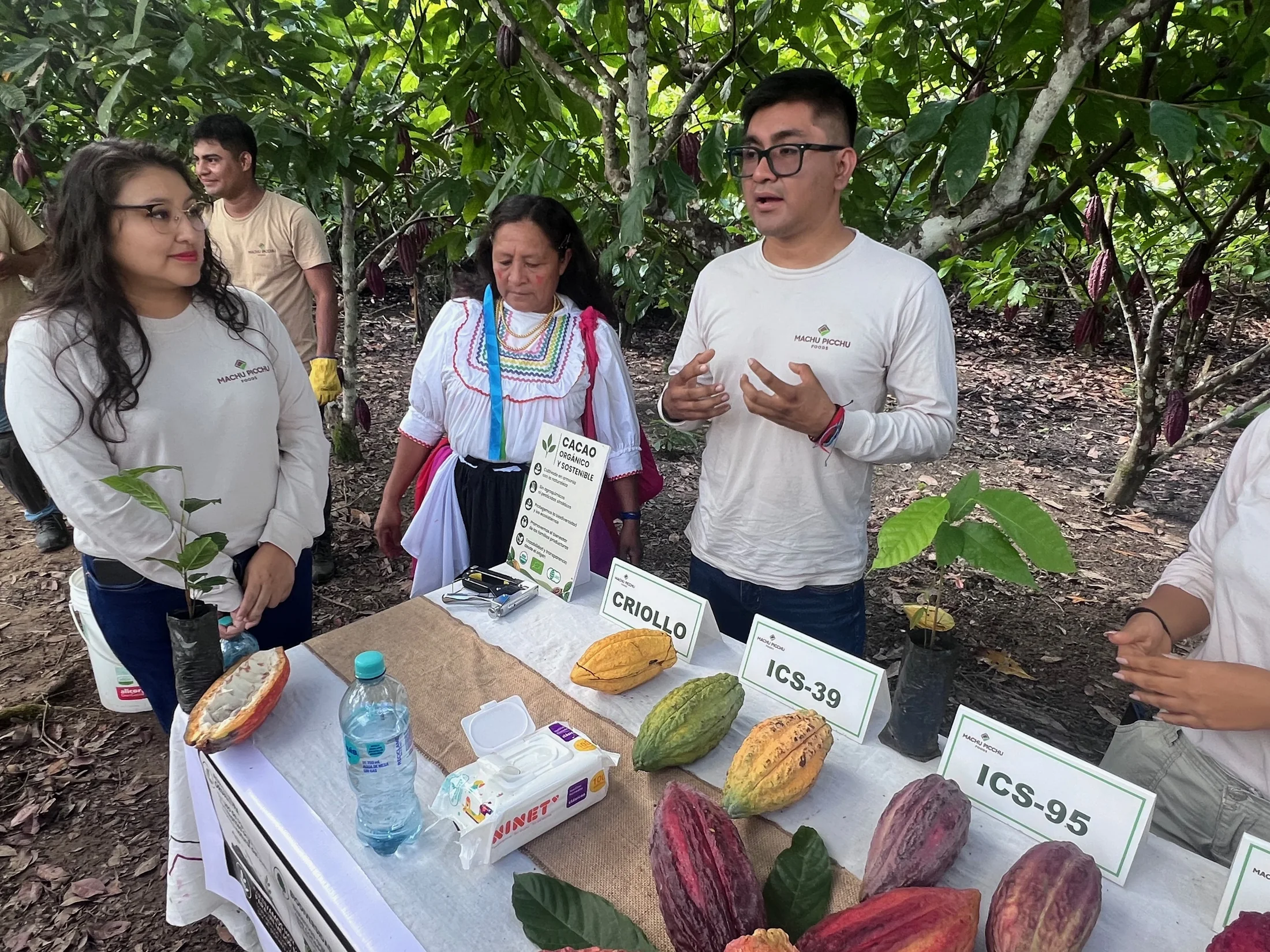
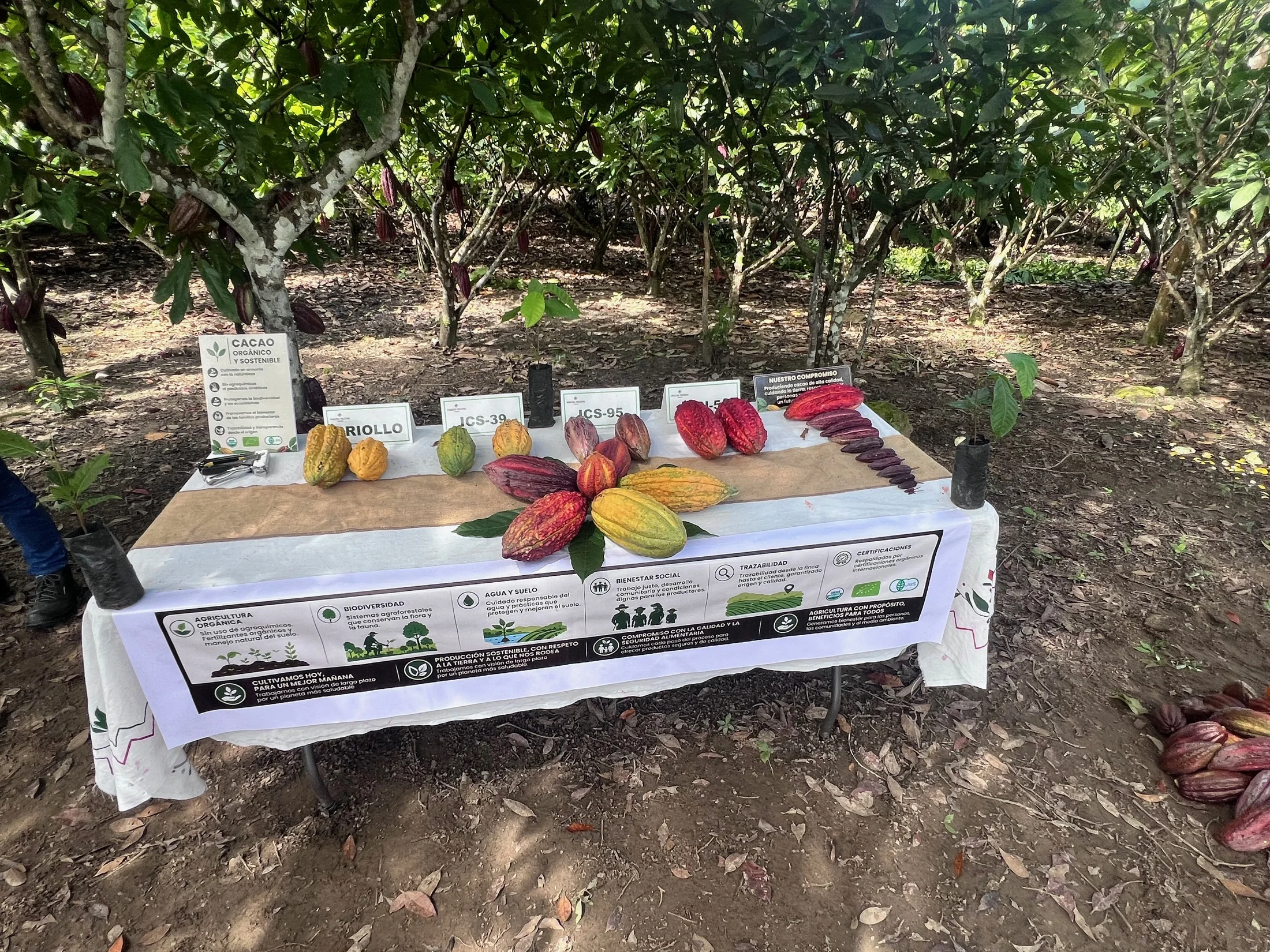
As we walked among the trees, Fasabi explained how growers establish cacao plants through grafting.
They first sow Criollo seeds and let them develop for about two to three months. Once established, they graft the young plants with material selected for productivity or other desirable characteristics.
On Dorita’s farm, Fasabi identified several types, including CCN-51 and ICS-39. Rather than harvesting and selling each separately, Dorita combines beans from the varieties cultivated across the plot.
The approach reflects a practical balance. The rootstock provides the plant’s foundation, while grafted material allows the farmer to pursue higher yields or particular agronomic characteristics. Maintaining several varieties on one farm can also reduce dependence on a single planting type’s performance.
Production in San Martín nevertheless fell by about 4% during the year. Peru’s National Institute of Statistics and Informatics attributed the national drop in cacao output to prolonged rainfall during fruiting and fungal diseases, including monilia. San Martín’s production declined by 4.09%, the institute reported.
The pressures underline why pruning, soil management, selective harvesting and disease prevention are more than technical details for smallholders: they directly affect the quantity and quality of cacao available for sale. Government technical assistance in Tabalosos has similarly focused on pest and disease management, organic fertilisation, soil analysis and the restoration of degraded soils.
For Dorita, however, the prevailing impression was one of confidence rather than crisis. She moved through the plot as someone at ease with both her crop and her visitors, showing us the seedlings and trees underpinning her relationship with the company buying her cacao.
The failed flight and nervous return to the air had made the journey longer than expected. Standing among the trees, far from the polished chocolate products familiar to consumers, the disruption felt worthwhile.
This was where the supply chain began: not in a factory or trading office, but on just over six hectares of organic cacao cultivated by a farmer who appeared to know every part of her plot.
Before the handover
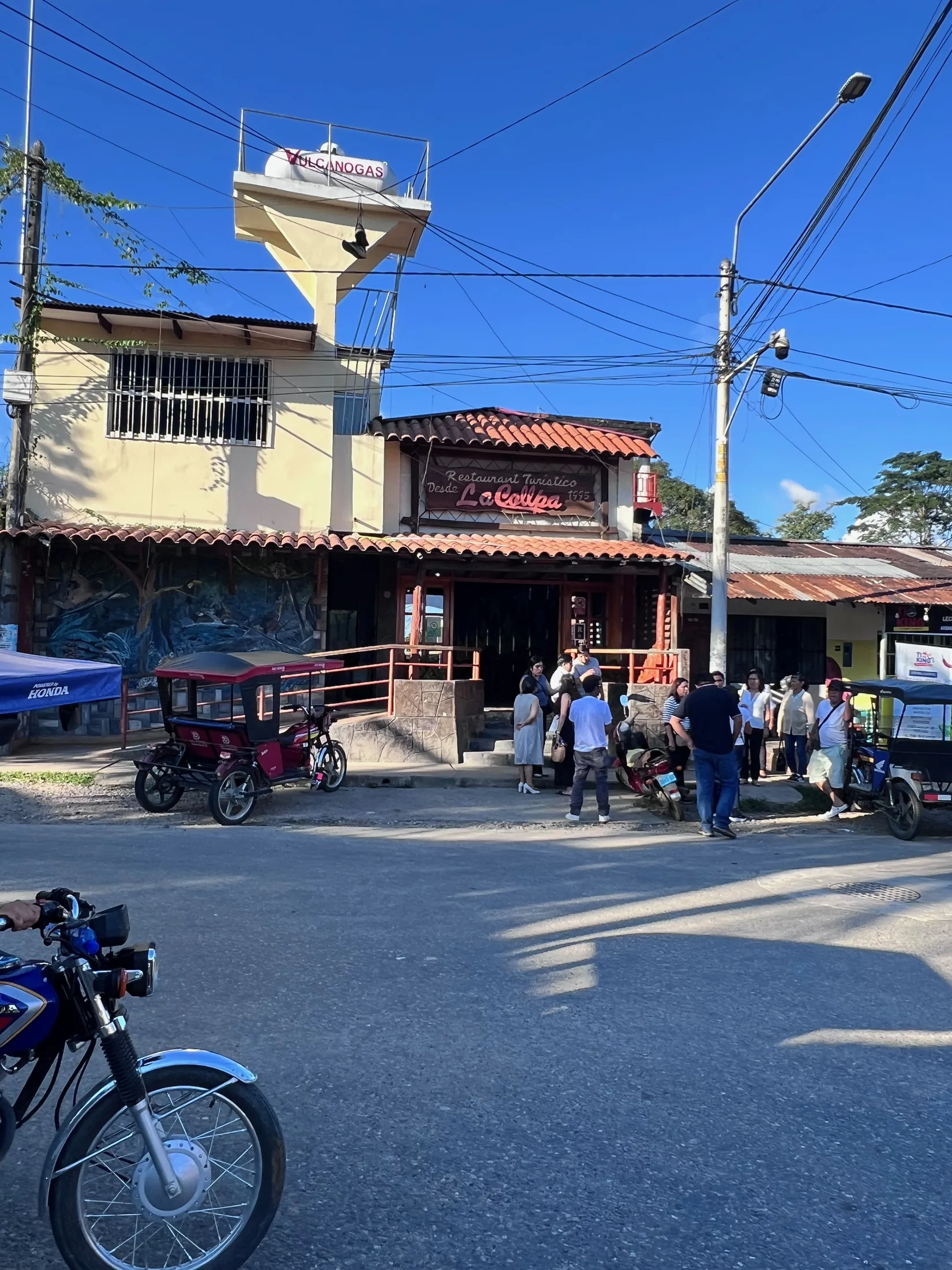
At La Collpa restaurant, lunch was patarashca: fresh river fish seasoned with local herbs, onions and chilli peppers, wrapped in a bijao leaf and cooked over fire. Washed down with fresh fruit juice, it offered an appropriately local prelude to our final stop.
Chapter four
The visit to Machu Picchu Foods’ warehouse and processing facilities showed how cacao entering the facility begins to acquire a documented identity. It also offered a closer look at the sustainability projects that MPF says are intended to protect forests, improve farm productivity and prepare producers for tighter international traceability requirements.
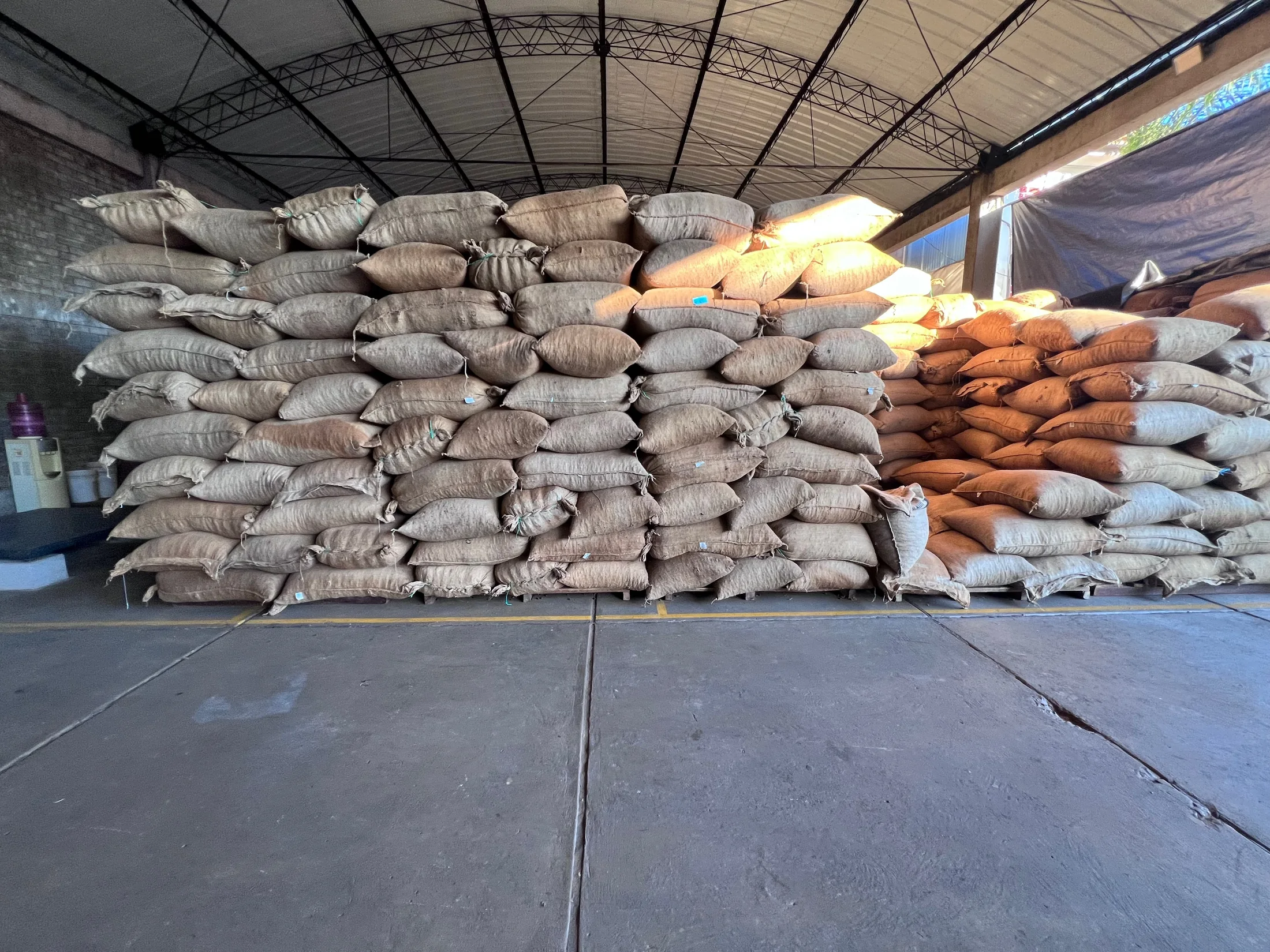
The reception process begins before a bag of cacao reaches the scales.
According to Teddy Torres, the facility’s leader for collection zones in the Tarapoto area, each registered farmer is assigned an identification number. Staff use MPF’s database to verify the supplier and retrieve information about the farm and its plots.
That record establishes whether the producer is classified as organic or conventional — a distinction that immediately changes the route taken by the beans.
The registered farmer and plot record establish the delivery’s origin and certification status.
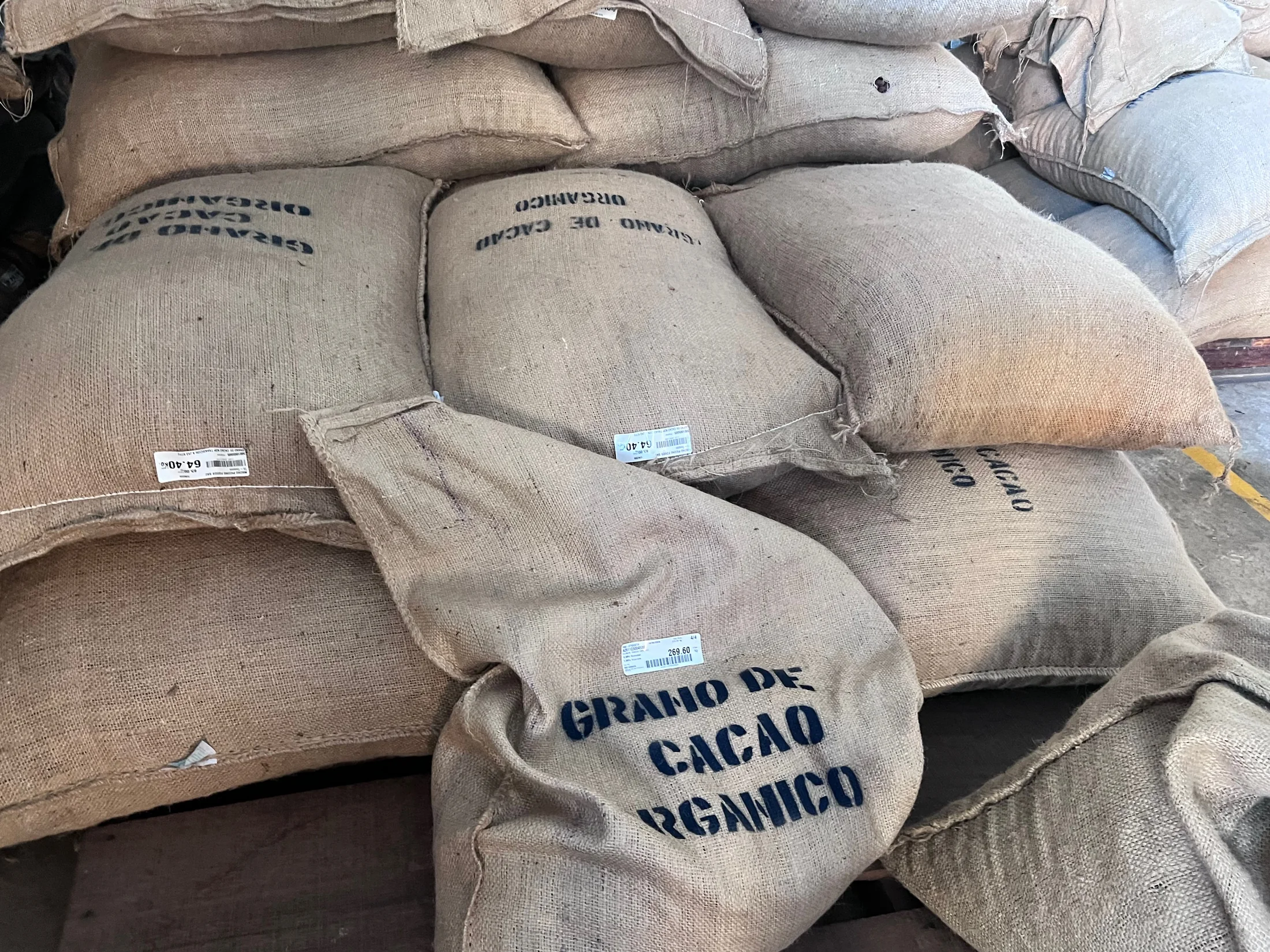
Organic and conventional cacao follow separate weighing routes to reduce cross-contamination risk.
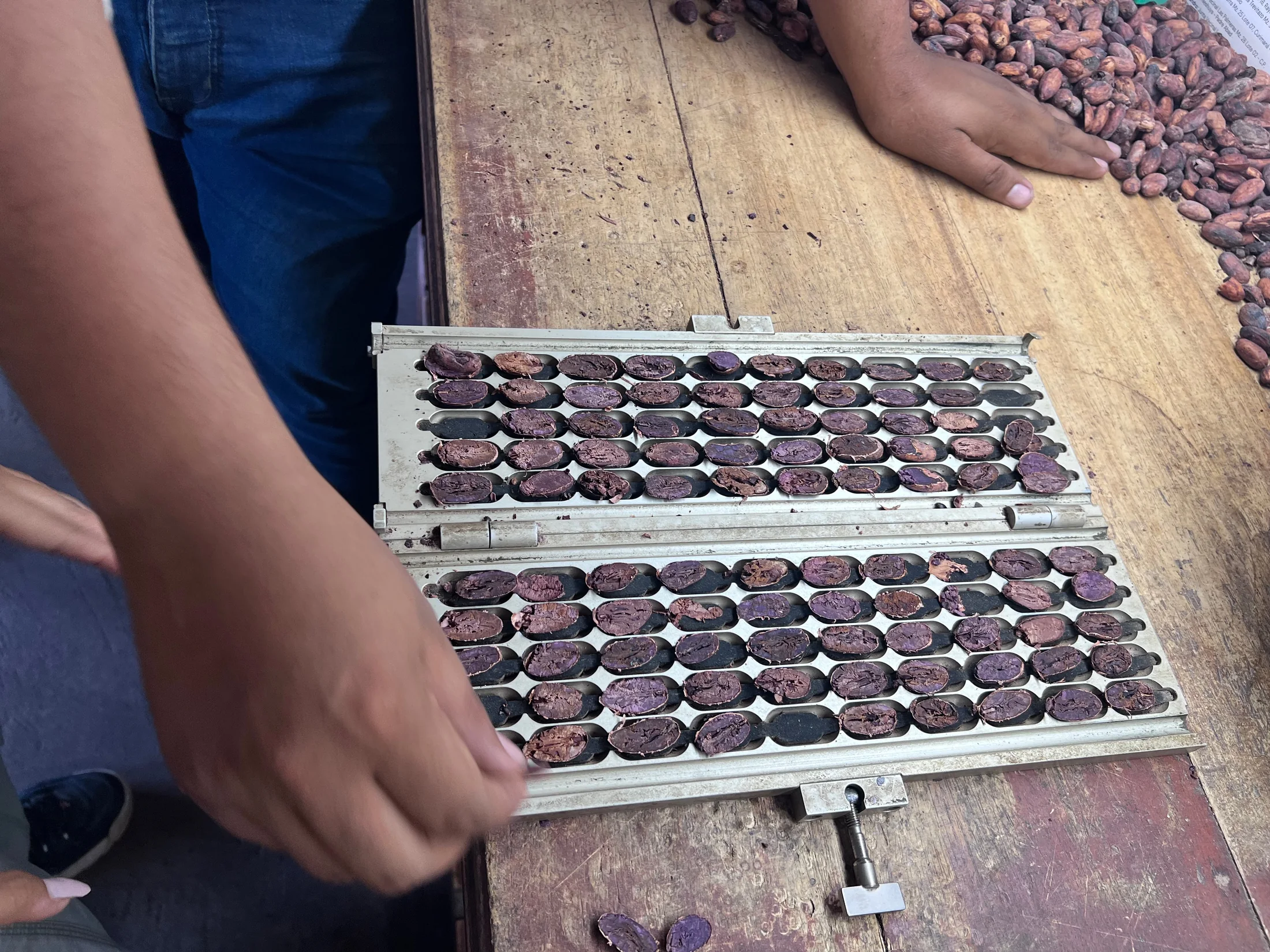
Staff check organic deliveries for mould, insects and moisture before beans are accepted for storage.
The facility maintains separate scales for the two categories. Conventional cacao is weighed on one and organic cacao on the other, a physical separation intended to reduce the risk of cross-contamination.
For organic deliveries, staff take a sample during weighing. Staff check the beans for evidence of mould or insects and test them to ensure their moisture content falls within the facility’s acceptance requirements. Only cacao meeting the required conditions is accepted for storage and allowed to continue through the process.
Seen at ground level, traceability is less an abstract promise than a series of controlled handovers: identifying the farmer, linking the delivery to plot information, establishing certification status, keeping physical flows separate, and recording whether the beans pass inspection.
The system is intended to allow a batch to retain its connection to its origin as it moves further into MPF’s supply chain.
Chapter five
During a presentation, I discovered that MPF’s certified sourcing programmes extend across 11 Peruvian regions: Ucayali, Huánuco, Pasco, San Martín, Loreto, Junín, Ayacucho, Madre de Dios, Cusco, Cajamarca and Amazonas.
producers · 3,075 tonnes
producers · 5,446 tonnes
producers · 2,565 tonnes
The presentation did not establish whether some farmers or volumes appear in both programmes, so the two sets of figures should not be combined.
MPF also displayed organic certifications covering the United States, Canada, the European Union, Japan, Peru, Argentina, Mexico and Brazil, alongside Rainforest Alliance certification. The source material available for this report did not show the relevant certification periods or current validity dates.
Fairtrade represents another part of the company’s sourcing system. MPF said it works with 14 Fairtrade cooperatives comprising 2,509 farmers and covering approximately 5,836 hectares of agricultural land.
According to the company, Fairtrade products account for 9% of its total purchases and half of its organic purchases. MPF said its work with the cooperatives includes technical and operational assistance to measure and georeference farms, partly to help them meet traceability and sustainability requirements associated with the EU Deforestation Regulation.
Chapter six
The presentation also set out two environmental initiatives intended to connect MPF’s processing operation with the landscapes where its cacao is grown.
The Clima Paisaje Project brings together MPF, the Earthworm Foundation and agricultural producers. Its activities include farm planning, agroforestry, restoration of degraded land, soil assessment and the mapping of farms, conservation areas, woodland, roads and homes.
MPF described a four-stage approach involving regular meetings, diagnosis and technical assistance, collaboration with producers, and implementation followed by continuing oversight. Training covers regenerative agriculture and forest management.
A second initiative, the Caosacha Project, is intended to bring reforestation and agroforestry measures to approximately 18,000 hectares of MPF-certified cacao farms.
Its stated phases run from diagnosis and analysis to reforestation and monitoring. MPF presents the work as a response to climate pressure on cacao production, certification demands, European deforestation rules and commitments to restore degraded land and increase biodiversity.
The presentation identified achieving 10% tree cover as a central compliance target. Further clarification is needed on how that threshold is calculated, which certification or regulatory provision it relates to and how compliance will be independently verified.
The scale set out in MPF’s presentation was impressive, but the figures also left important questions about timescales, overlap, measurement and verification.
As we left Tarapoto, the connection between lunch and the warehouse felt instructive. Both were rooted in the region, but only one came with a growing burden of documentation.
For cacao, knowing where a product comes from increasingly means being able to prove it — farmer by farmer, plot by plot and batch by batch.
At MPF’s facility, that proof begins with an identification number, a database record, the correct scale and a sample taken from the beans.
Digital records are only one part of the system. Credible traceability also depends on physical segregation, consistent sampling and accurate farm mapping.
The journey had begun with a plane unable to find its way through the fog. By the time I left Tarapoto, the greater challenge was clear: ensuring that every bag of cacao could find its way back through the supply chain to the farm where it began.